In This Guide
- Is Goa actually good for scuba diving?
- Best scuba diving spots in Goa
- Best season for scuba diving in Goa
- Types of dives you can do in Goa
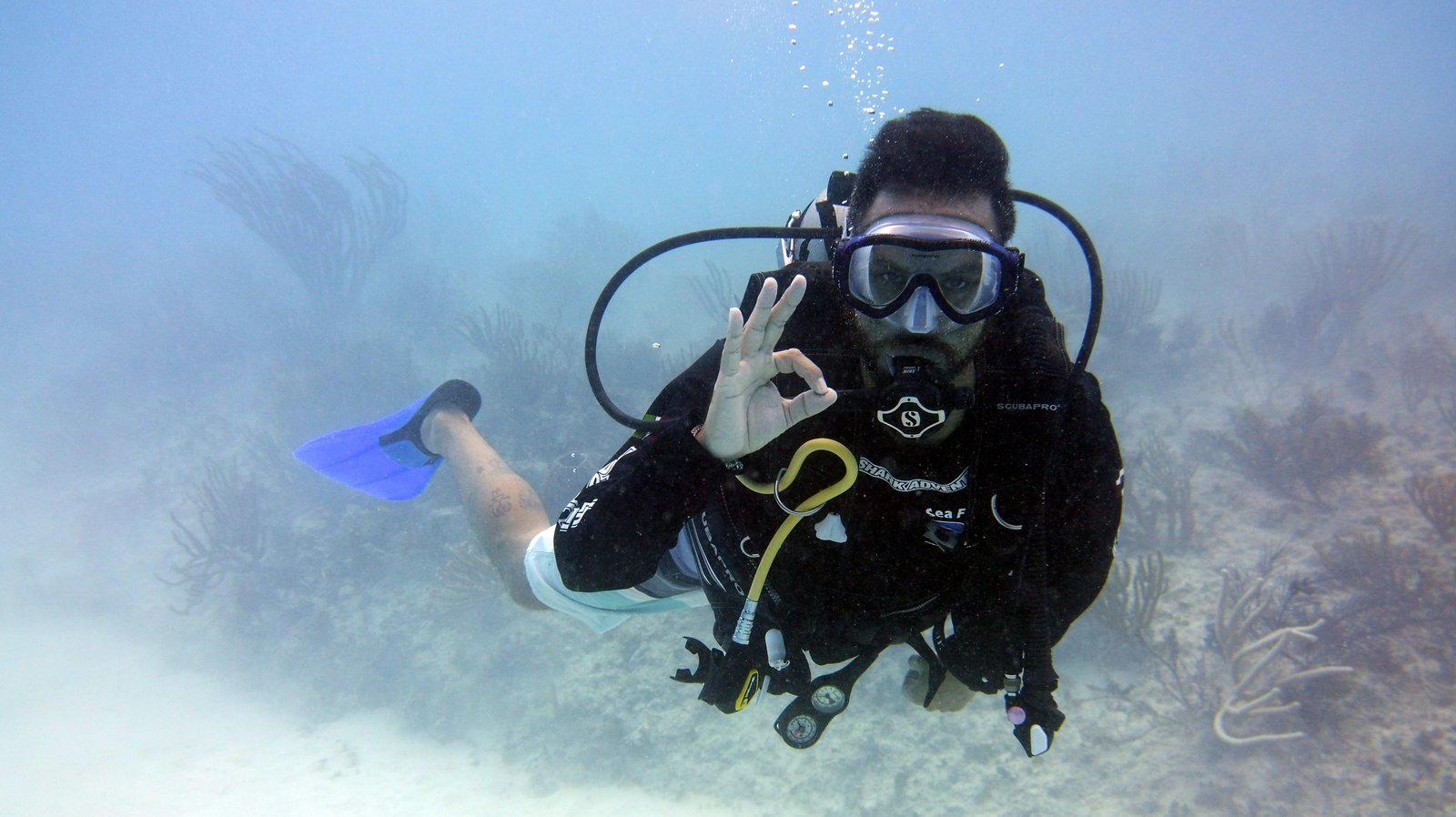
- What actually happens on a Goa scuba dive
- Real pricing for scuba diving in Goa
- Safety: how to spot a good dive operator
- Marine life you will see
- Beginner tips before your first dive
- PADI certification options in Goa
- Combining scuba with other Goa activities
- Scuba diving FAQ
Every week, someone messages us asking the same question in slightly different words. "We are coming to Goa in December and we want to try scuba diving. Is it worth it? Where do we go? Who should we book with?"
The honest answer is: Goa is not Andaman, and it is not Lakshadweep. If you are expecting crystal-clear turquoise water with 30-metre visibility and a coral reef bursting with colour, you will be disappointed. But if you are looking for a genuine first dive, at a reasonable price, with a certified instructor, on a beautiful boat ride out to an island, with real fish and real marine life around you, then Goa delivers exactly that.
This guide is our complete, honest, local view of scuba diving in Goa. It is written by the GoaThrills team from our Calangute office, based on sending thousands of guests to dive sites around the coast. If you are thinking about scuba during your Goa trip, or you are trying to build it into a package, this is the guide to read first.
1. Is Goa actually good for scuba diving?
Let's be blunt about this because there is a lot of marketing noise on the internet about scuba in Goa.
What scuba in Goa is: a genuine, guided, entry-level ocean dive. You go out on a boat, put on real gear, and descend 6 to 12 metres under the water with a certified instructor next to you. You see fish. You feel weightless. You come back on a boat. It is a real dive, not a simulation.
What scuba in Goa is not: a world-class reef experience. Visibility varies between 5 and 15 metres depending on the season. The coral is limited compared to tropical destinations. If your dream is to dive in the Maldives or the Red Sea, Goa will not match that.
But here is what makes Goa scuba worth it. It is affordable, accessible, open to total beginners, and gives you a genuine taste of underwater diving without needing to fly to another country. For a first-timer, it is an excellent introduction. Many of the divers we send out on a Goa dive come back with a real decision to get certified next.
So the fair answer is: if you have realistic expectations and a good operator, scuba diving in Goa is absolutely worth doing. If you expect Maldives-level visibility, you will be disappointed.
A simple test
Ask yourself: do you want to see fish and experience breathing underwater? Goa delivers that beautifully. Do you want to see pristine coral and 30-metre visibility? Book Andaman or Lakshadweep instead. Two different products, two different expectations.
2. Best scuba diving spots in Goa
There are a handful of actual scuba diving spots that operate out of Goa. Here is the honest list.
Grand Island (the standard choice)
Grand Island is the default scuba diving destination in Goa. It is a small island about 20 to 25 minutes by boat from Sinquerim. Most of the scuba operations in Goa run their trips out here. The water around Grand Island is calmer than the main coast, visibility is decent in season, and there is a good amount of marine life for a beginner dive.
Typical trip: leave Sinquerim at 8 or 9 AM, reach Grand Island in about 25 minutes, dive for 20 to 30 minutes, spend time snorkelling and swimming, eat a BBQ lunch on the boat, do a second activity like parasailing or dolphin spotting, and return by 3 or 4 PM.
Netrani Island (for a dedicated dive trip)
Netrani Island is off the Karnataka coast, about 4 to 5 hours by road from North Goa. It is a genuinely good dive site with better visibility and richer marine life than Grand Island. Some operators run day trips from Goa. This is a longer, more premium option. Worth it if diving is the main goal of your trip rather than just one activity.
Shore dives near Sinquerim and Bogmalo
For beginner training sessions and certification course dives, many centres use shore dives from Sinquerim or Bogmalo. These are shallow, controlled and ideal for learning skills before going out on a boat.
What is not a real scuba dive spot
Some operators market "diving" at beaches like Baga or Calangute. What they actually offer is snorkelling, sea walking or shallow pool dives. These are fine experiences but not the same as a real ocean scuba dive. If scuba is the goal, insist on a Grand Island or Netrani boat trip.
3. Best season for scuba diving in Goa
The scuba season in Goa is short and clearly defined.
October to May | the dive season
Every dive centre in Goa is open from October to May. November to February has the best combination of calm sea and clear water. Visibility is usually between 5 and 15 metres. March to May is warmer but still diveable, sometimes with better visibility than peak season.
June to September | monsoon shutdown
No scuba diving in Goa during monsoon. The sea is rough, the coast is closed for water-based activities, and all dive centres shut down. If you plan a Goa trip in monsoon and expect scuba, you will be disappointed.
The two best weeks of the year
If you can pick dates specifically for scuba, aim for late November and early December. The sea is calm, all dive centres are open, and visibility is often at its best. Alternatively, mid-February to mid-March is a strong second window.
4. Types of dives you can do in Goa
There is not just one kind of scuba experience. Here is what you can actually book in Goa.
Try Scuba / Discovery Dive
The beginner's option. No certification needed. You do a short briefing on the boat, get into the water with an instructor holding you, and dive to about 6 to 10 metres for 20 to 30 minutes. Perfect for first-timers who want to try it once.
PADI Open Water Course
The international certification that lets you dive anywhere in the world. 3 to 4 days, includes theory, confined water training and 4 open water dives. This is a real investment in diving as a hobby. Prices vary between dive centres.
PADI Advanced Open Water
For certified divers who want to go deeper and learn specialties like night diving, deep diving, navigation. Usually 2 to 3 days. Only some Goa dive centres offer this.
Fun dives for certified divers
If you already have a licence, you can book guided fun dives at Grand Island or Netrani. Rates are lower than certification courses because there is no training involved.
Underwater photography packages
Some dive centres offer dedicated underwater photography sessions with a professional photographer. Higher cost, but you come back with real dive photos, not just phone shots through a mask.
5. What actually happens on a Goa scuba dive
If you have never done this before, here is the honest run of a typical day so nothing surprises you.
Pickup from your hotel
Around 8 AM. Shared or private transfer to Sinquerim jetty, depending on your package.
Boat departure
By 9 AM, a boat takes you out. On the way, you will often spot dolphins. The ride to Grand Island takes 20 to 25 minutes.
Briefing and gear
Your instructor briefs you on hand signals, breathing, and what to do if water enters your mask. You are fitted with a wetsuit, BCD, regulator, mask and fins. All gear is provided.
The dive itself
You descend to 6 to 10 metres with the instructor. You stay near the boat, hold onto a line if needed, and slowly explore. Total underwater time is usually 20 to 30 minutes.
Snorkelling and lunch
After the dive, you can snorkel, swim, and eat a simple BBQ lunch on the boat or beach nearby. This is often the most fun part of the day for beginners.
Optional extras and return
Some trips include parasailing, jet-ski or dolphin spotting on the way back. You are back at Sinquerim by 3 to 4 PM and at your hotel by 4 to 5 PM.
Every scuba experience we book for guests follows this shape. The operator names, boat type and lunch quality are things we screen for.
6. Real pricing for scuba diving in Goa
Here are the honest rates for scuba diving in Goa as of this season. All rates are per person unless stated.
| Experience | Typical Price | Includes |
|---|---|---|
| Try Scuba / Discovery Dive | Rs 2,000 to Rs 3,500 | Boat transfer, all gear, instructor, 20 to 30 minute dive, underwater photos |
| Grand Island Combo (scuba + snorkel + lunch + dolphin) | Rs 2,500 to Rs 4,000 | Everything above plus snorkelling, BBQ lunch, dolphin spotting, and sometimes parasailing |
| PADI Open Water Certification | Rs 22,000 to Rs 35,000 | 3 to 4 days, theory, confined water training, 4 open water dives, international certification card |
| PADI Advanced Open Water | Rs 20,000 to Rs 30,000 | 2 to 3 days, 5 adventure dives, certification upgrade |
| Netrani Island dedicated dive trip | Rs 6,000 to Rs 10,000 | Full day trip from Goa, 2 dives, lunch, transport, gear |
A few things to keep in mind. Rate differences between operators are usually down to gear quality, instructor-to-diver ratio, boat quality, and whether underwater photos are included or charged extra. If a rate is far below the standard, one of those four things is being cut.
Every scuba booking through our Goa activities page is with verified operators who include underwater photos in the price and maintain a low diver-to-instructor ratio.
Want to book scuba with a verified operator?
Tell us your dates and group. We reply with a verified scuba plan on WhatsApp.
7. Safety: how to spot a good dive operator
Scuba is a safe activity when done right, and dangerous when done badly. This is the single most important section of this guide.
Red flags (walk away)
- No PADI or SSI certification displayed
- More than 4 divers to one instructor
- No briefing on hand signals or emergency procedures
- Gear that looks old, torn or patched
- No insurance or medical form mentioned
- Prices way below everyone else (Rs 999 "scuba" is snorkelling, not scuba)
- Claims of 30-metre dives for beginners
Green flags (good sign)
- PADI-certified instructors on duty
- 2 to 3 divers per instructor maximum
- Proper briefing in a language you understand
- Well-maintained gear, wetsuits and BCDs
- Medical form filled before the dive
- Clear refund policy for weather cancellations
- Photos and video included in the standard rate
Every operator we book for guests passes the green-flag checklist. We personally know the dive masters at the centres we work with.
8. Marine life you will see
Goa scuba is not coral-heavy, but the fish life is surprisingly good for a beginner dive. Here is what you can expect to see around Grand Island.
- Angelfish | common, colourful, photogenic
- Parrotfish | large, colourful, often seen grazing on rock
- Groupers | big, slow, sometimes curious about divers
- Snappers and butterflyfish | schools drifting past
- Moray eels | hidden in crevices, watch for the head sticking out
- Stingrays | resting on the sandy bottom
- Sea cucumbers and starfish | common on the sand
- Dolphins | often spotted on the boat ride, not underwater
- Small reef sharks | occasionally in deeper spots, harmless
If you dive during peak season (November to February) the water is clearest and you will see most of this. In April and May, visibility often improves but the fish life is slightly quieter.
9. Beginner tips before your first dive
A few small things that make a big difference to your first Goa scuba experience.
- Do not drink the night before. Alcohol and diving do not mix. Even one drink can affect your equalisation and clarity underwater.
- Sleep well. A tired diver is a nervous diver.
- Eat a light breakfast. Not too heavy, not empty. A banana and some toast is ideal.
- Wear a swimsuit under your clothes. You will be changing into a wetsuit on the boat.
- Bring a towel and dry clothes. You will get wet. There is no avoiding it.
- Listen during the briefing. Hand signals matter. Pay attention to the "equalise" and "ascend" signals.
- Do not hold your breath. Breathe normally, evenly, slowly. Panic breathing makes the dive harder.
- Tell the instructor about any ear or sinus problems in advance. Equalisation is the most common beginner issue.
- Skip scuba if you are pregnant, have asthma, epilepsy, heart conditions or recent surgery. All operators should have a medical form for this.
- Do not chase the fish. Let them come to you. Chase and they swim away.
- Take the underwater photos. This is the memory you will keep.
Our standard scuba advice to guests
If it is your first time, book the Try Scuba option, not the certification. Try one dive, see how you feel, and then decide whether you want to commit to the PADI Open Water course. About a third of our guests who do one dive end up coming back for certification within a year.
10. PADI certification options in Goa
If scuba resonates with you, Goa is one of the more affordable places in India to get certified. Here are the standard options.
PADI Open Water Diver
The global entry-level certification. Takes 3 to 4 days including theory, pool or confined water training, and 4 open water dives. Once you have this, you can dive to 18 metres anywhere in the world. Cost in Goa: Rs 22,000 to Rs 35,000 depending on dive centre, group size and inclusions.
PADI Advanced Open Water
The next step. 5 adventure dives including deep and navigation, plus specialties you choose (night dive, wreck dive, drift dive, etc.). Takes 2 to 3 days. Cost in Goa: Rs 20,000 to Rs 30,000.
PADI Rescue Diver
For experienced divers who want to be able to help others in an emergency. Not all Goa centres offer this. Usually 4 to 5 days.
Specialty courses
Underwater photography, wreck diving, night diving, deep diving. Prices vary. Available with select dive centres.
Certification prices in Goa are usually 20 to 30 percent lower than equivalent courses in Thailand, Maldives or Sri Lanka. If you want certification and a holiday in one trip, Goa is genuinely good value.
11. Combining scuba with other Goa activities
Scuba is usually half a day or one full day. Here is how to fit it into a larger Goa trip.
- Add it to a Grand Island day trip | combines scuba with snorkelling, BBQ lunch and dolphin spotting
- Pair with a sunset cruise | scuba in the morning, Mandovi dinner cruise in the evening
- Combine with watersports | scuba at Grand Island, then parasailing or jet-ski at Baga on the way back
- Include in a couple package | scuba for the adventurous couple, spa for the cautious one
- Corporate add-on | scuba as a team-building activity for smaller corporate groups
- Group booking | scuba for 6 to 15 people with advance booking at discounted rates
Every Goa customized package we build can add scuba on any day. Our group packages, couple packages and family packages all offer scuba as an optional add-on for the right age group.
For guests who want more than one adventure activity, we usually recommend building a day around Grand Island, and a separate day around Baga or Calangute for the other water sports. Doing both on the same day gets exhausting.
12. Scuba diving FAQ
Yes, scuba diving in Goa is safe for beginners when done with a certified instructor and a verified operator. The dive is shallow (6 to 12 metres) and instructors stay close throughout. GoaThrills only works with PADI-certified dive centres that have proper safety gear, insurance and rescue-trained staff.
Grand Island is the most popular scuba diving spot in Goa, about 20 minutes by boat from Sinquerim. Other options include Netrani Island off the Karnataka coast and shore dives near Sinquerim and Bogmalo for beginner sessions. Grand Island is the standard recommendation for first-timers.
A beginner scuba dive at Grand Island in Goa usually costs between 2,000 and 3,500 rupees per person including boat transfer, gear, instructor and underwater photos or video. PADI Open Water certification courses range from 22,000 to 35,000 rupees. GoaThrills packages include scuba at verified rates with no hidden costs.
The best time for scuba diving in Goa is October to May. The sea is calm, visibility is 5 to 15 metres, and all dive centres are open. Monsoon months (June to September) shut down all water-based scuba. If you are planning a scuba trip, aim for November to February for the best conditions.
You do not need to be a strong swimmer for a beginner scuba dive in Goa. Basic comfort in water is enough because you are guided by a certified instructor at all times. For PADI Open Water certification, you do need to demonstrate basic swimming ability.
Common marine life at Grand Island includes angelfish, parrotfish, groupers, snappers, butterflyfish, stingrays, moray eels, sea cucumbers, and occasionally small reef sharks in deeper spots. You may also spot dolphins on the boat ride. Visibility is not as clear as Andaman or Lakshadweep, but marine life is rich for a beginner dive.
Beginner scuba dives in Goa go to about 6 to 12 metres depth. Certified divers can go up to 18 metres at some spots. For safety and comfort, beginner dives are always shallow. Anyone without certification is not allowed below 12 metres.
Most Goa scuba packages include underwater photos and short video clips as part of the package. Some operators charge extra. GoaThrills only books scuba with operators who include underwater photos in the standard rate, so there are no surprise charges.
Yes. Scuba diving in Goa is open to anyone above 10 years of age (with parental consent) and in good health. Family packages from GoaThrills often add scuba for the adults and older kids, while younger kids enjoy the boat ride, snorkelling and beach time.
GoaThrills is based in Calangute, North Goa, with a real office and a team that lives here. We only book scuba with PADI-certified dive centres that use proper safety gear, have insurance and follow international dive protocols. Every scuba booking includes a coordinator on WhatsApp, verified pricing and no hidden charges. That is why clients call us the best DMC for Goa.